
Find God’s Help and Truth
follow all religons

God Is One — Forever and Always.
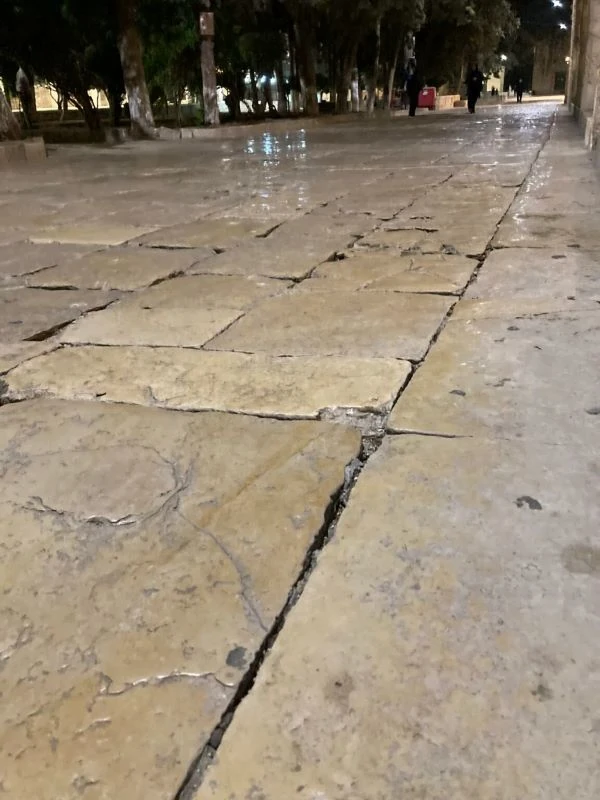
This space is dedicated to exploring the shared spiritual roots that connect humanity across time, tradition, and belief. Through thoughtful reflection on the lives of prophets such as Moses, Abraham, David, Jesus, and Muhammad, and the sacred texts that shape faith — including the Torah, Gospel, Quran, Psalms, and the Old and New Testaments — I invite you into a journey of understanding rather than division.
Religions & Faith Traditions
-
Christianity
-
Islam
-
Judaism
-
Hinduism
-
Sikhism
-
Buddhism
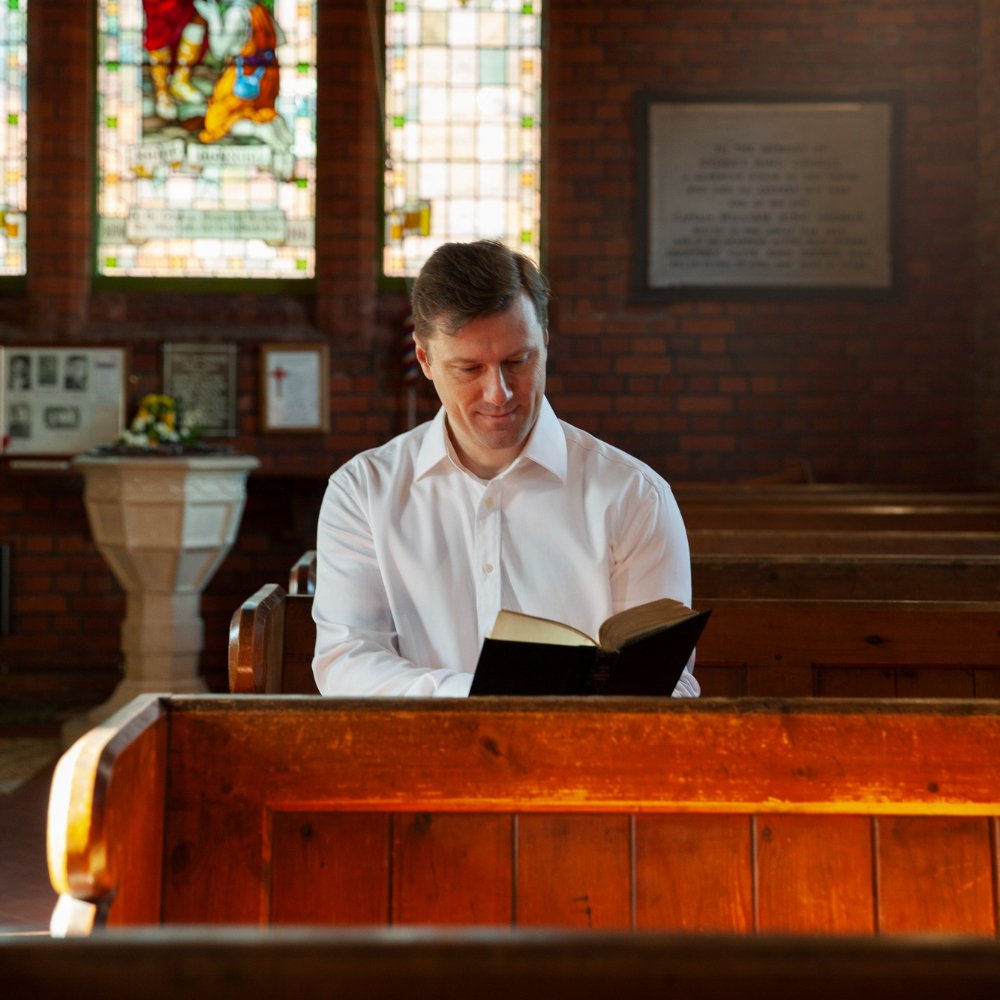
One Faith, Many Paths — Discovering Truth Across Religions
My platform is dedicated to exploring the shared values, teachings, and histories of the world’s major faiths through respectful dialogue and thoughtful study.
- Comparative Insights
- Prophets & Sacred Texts
- Historical & Cultural Context
- Guided Learning Resources
Psalm, Songs and more
More about Jewism
More about Christianity
More about Islam
Does Islam mean peace?
To answer this question, one must delve into Arabic grammar.
Arabic words are generally built upon a three-letter root. Thus, Islam is composed of the three core letters S-L-M, or Salama, which means peace. This is preceded by an “I,” which in Arabic grammar corresponds to a command. Consequently, it means something like “Be peaceful,” “Make peace,” “Follow peace,” “Seek peace,” etc. Similarly, there is the word “Iclis,” which translates to “Sit down.” The root C-L-S, or Celese, means “sit.” With the preceding “I,” it becomes an instruction, “Sit down.” Arabic words are formed according to this principle. Similar to German, for example, “legen” (to lay) becomes “hinlegen” (to put down), “auflegen” (to place on), or “auflegen” (to place on top). The prepositions
“hin”, “auf”, and “drauf” modify a verb in the same way. The word Muslim with the “M” at the beginning refers to someone who performs something, that is, someone who “makes peace”, “follows peace”, or is a “peacemaker”. For comparison, the word “Muallim”, which means teacher. The root A-L-M stands for the word “knowledge”. With the “M” at the beginning, it becomes someone who “spreads knowledge”, “teaches”, or “instructs”. This is important to understand. Because without this basic understanding, one will not understand Islam or will misinterpret it.
Quran about Jesus
“Whoever does not follow Jesus remains a slave of the Kafirun,” says the Quran. (Al-Imran 55)
How can it be that the Quran commands us to follow Jesus? And why is he even mentioned there? Well, we need to delve deeper into the story. What is the Quran? What is the Gospel, and what is the Torah? They are all books from God, and essentially, Jesus is first prophesied in the Jewish book. Then he actually comes, and miracles and deeds occur, and these events are summarized in the Gospel. Finally, God sends down a new book after Jesus and his followers have been silenced. Through Muhammad, God brings Jesus back into people’s memories, or rather, he practically resurrects him. Although he was never truly dead; he was only portrayed as such. Which powers orchestrated this will be explained in this book. I can already tell you: it was the Romans.
Some might ask, “How do I know all this?” I am a devout Jew, Christian, and Muslim. And I know my religions and world history quite well. Although “religions” is actually a bad word. Because the Romans misused that word once again. Because all religions were established, created, or manipulated by the Romans. Because God did indeed send these books through prophets. But the world powers, or rather the Romans, had to conceal the fundamental essence of God’s messages, or books, in order to sever or at least minimize the connection between humanity and the Creator. Because only in this way could they continue to exert their power. Because a person with strong faith is difficult, if not impossible, to control. Because they will not be seduced by money, consumption, luxury, status, and material possessions. And the Romans controlled all these goods, offering them to people in exchange for slave labor. Yes, you heard right. We are trapped in slave labor if we don’t have Jesus. Because he sets us free from all these things. That’s why he had to be eliminated. The Romans wanted to kill him, but they couldn’t. That’s what the Quran says, and I believe it from a logical point of view. For God sends a savior to the world to free humanity from slavery. He would never allow himself to be killed. Messiah means God’s savior or helper in Hebrew. Much about religion and world history can be deduced by translating words from their original languages. But I can also say from personal experience that Jesus set me free. I no longer work a typical 9-to-5 job with 30 days of vacation that have to be requested or applied for. As a freelancer, I can now take vacations or work whenever I want. And I achieved this with Jesus. Without him, it wouldn’t have been possible. But I’ve also gained freedoms through him. I’ve rejected bad habits. I’ve grown personally. And so on and so forth… But it must also be said that one must be willing to carry one’s cross. For one will face disadvantages. But the more one is disadvantaged, the more one must follow Jesus and become more like him in order to overcome the difficulties. For the Romans are back in power. After their downfall, they secretly rebuilt their empire and now call themselves Greece, Italy, Spain, Germany, Turkey, England, and so on. All the countries of the world belong to them. But don’t worry. God prophesied this in the Quran: “The Romans are defeated. But they will soon return to power. And it will not be long before God again triumphs and leaves the earth to the believers and the righteous.” What happened? After the Romans tried to kill Jesus, God sent one natural disaster after another upon the empire until finally only rubble and ruins remained. This is all very evident in Turkey, Greece, and the Middle East. And now we are in the phase where the Romans are back in power. It remains to be seen how long it will take before everything falls apart again. This is also what the Bible prophesies. “No stone will rest upon another stone. Everything will be destroyed. And afterwards, God will bring the good people back to life.”
More about Jesus in the Quran
A professor at the University once asked how often Jesus appears in the Quran. No one really knew. All the estimates were off. He is mentioned directly and indirectly over 100 times in the Quran. As the Messiah or son of Mary, the Word of God, or Jesus, who received the Gospel. Likewise, the savior or miracle healer who heals the sick. The one who spoke as an infant in the manger. The sinless one, the Spirit of God, etc. Even his miraculous birth is described in detail. So, all of this is not in contradiction with the Bible.
There are only two points that contradict the Christianity generally known today. The Quran states:
1. That he is not the biological son of God.
2. That he is not God as part of the Trinity. But these two points have always been criticized by Christians, and even today there are Christian denominations that disagree with them. The Roman Catholic Church had to convene several councils to discuss these points and ultimately establish them. This took place over several decades, if not centuries. Incidentally, the last council was held in Nicaea, in Turkey (now Iznik). Some scholars even claim that Islam was initially a Christian group and later developed into a sole religion. There might be some truth to this, as the Quran very often mentions that one should and must believe in the Bible.
According to the Quran, only Muslims go to paradise?
There is a verse in the Quran that says, “And whoever has not embraced Islam during his lifetime will never enter paradise.” This is the commonly known translation. This is one reason for non-Muslims to question Islam. And “radical Muslims” boast that “Islam is the true religion” and refer to non-Muslims as kuffar. Kuffar is simultaneously understood as godless and an insult. A much more beautiful translation is the one I heard from Husameddin Mayer. Kuffar means veiled. In the sense of eyes closed, so as not to recognize the beauty of faith in God.
Now, what does the Quran mean by saying that only Muslims go to paradise? If you translate it, it simply means that only peacemakers go to paradise. So, the passage “Whoever does not accept Islam will not enter Paradise” means: Whoever is not peaceful will not enter Paradise.
Regardless of which religion they belong to.
John the Baptist (Yahya asm)
I came across this during a trip to Istanbul-Pendik. I was searching for information about the district online and found the following by chance on Wikipedia. The Byzantine Emperor Constantine (who, after the fall of Rome, was the absolute ruler of the Christian world at the time) wanted to express his power and summoned the mortal remains of John the Baptist to the Byzantine capital, Istanbul (then Constantinople). The bones had to be removed from his tomb in Damascus and transported by horse and carriage. Shortly before Istanbul, in Pendik, the horses suddenly stopped and refused to go any further. Even with their greatest effort, they could not persuade them to continue. The emperor dozed off and ordered the bones to be buried there. Whether this is actually true, I don’t know, but it’s certainly an interesting story.
Are virgins waiting in paradise?
There are now several sources indicating that this is a mistranslation. For example, a Turkish theologian published a book entitled “The Peaceful Translation of the Quran,” in which he explained that the word “Anab” refers to grapes.
He says it is a metamorphic description of paradise, similar to the reference to the fruits of the Garden of Eden. The word “Anab” also means grape in Aramaic, a Semitic language very similar to Arabic. I also asked a Syrian, who only knew the word as meaning grape.
Does the Quran command the killing of unbelievers? Muslims are often confronted with this question, to which they usually reply: “Yes, but only in war, or in self-defense, or something similar.” Because they cannot deny that this passage exists. But what is its significance? One must be aware that the Quran still exists in the wording of the spoken language of about 1500 years ago. If one translates it word for word according to today’s knowledge of the Arabic language, it will not convey the original meaning. That must be logical. And most translators haven’t bothered to consider the historical development of the language. It’s simply not possible to accomplish that in a short time. It would probably take years before a work could be published, and it wouldn’t be economical. Anyone who has ever tried to translate a simple sentence from the Quran understands what I mean. I also refer here to Günther Schwarz, who needed 50 years to translate the Bible from its original Aramaic version into German in a way that accurately reflects its meaning. Now, according to today’s Arabic dictionary, the word “Katala” means “to kill” in German. But that doesn’t make sense. Because according to the Quran, killing is the greatest sin there is. Furthermore, it is declared a mortal sin in the Bible. According to the Quran, a Muslim must believe in the Bible.
Therefore, there are two pieces of evidence that this word must originally have had a different meaning. Presumably, it referred to “Kata,” which in modern Arabic means to cut or separate. In the sense of “severing ties with someone.” The most logical translation would be: Break off contact with non-believers. Perhaps the ending “-la” was added to “Kata” over time. The true reason can only be speculated upon. For comparison, there are examples from Old High German and modern German. In an Old High German dictionary, I discovered terms that had one or two fewer or more letters back then, with the same meaning today. As the most extreme example, I found a word that used to mean the complete opposite. And the dictionary was only about 100 years old. The Quran was written 1500 years ago. A lot can change in that time. Compare to the German spelling reform. Every 5-10 years or so, a new rule and a new dictionary are released.
Is it permissible to leave Islam?
There is a passage in the Quran that says:
“Whoever has embraced Islam, may never leave it. This is what Allah commands.” This or a similar interpretation is widely known.
Sometimes Muslims are asked about it.
The answer is usually: “Once you have experienced the beauty of Islam, you will never want to leave Islam.” That may be true. But I sought a scholarly answer and found a very interesting translation: “Whoever has found peace in religion will never lose it again, regardless of which religion they belong to.”
Because Islam means peace. You don’t have to belong to any particular religion to be peaceful.
Why is Jesus not recognized as the Son of God?
In Arabic, there are two words for son: Ibn and Velet. Velet corresponds to the biological son, and Ibn refers to someone who is very close to you, even closer than the well-known Arabic word “brother” for a very good friend. And in the Quran, it says that Jesus is not Velet of Allah, meaning he is not the biological son of God. However, he can certainly be Ibn Allah, as someone who is very close to God. Incidentally, Arab Christians still use the term Ibn Allah today.
More interesting facts about God and the world
The best discoveries are sometimes made completely unexpectedly.
Did you know that?
THE TOMB OF HANNIBAL
I happened to be changing buses in Gebze (Turkey) and googled the place again, and learned something amazing. And indeed, the fierce opponent of the Roman Empire is also buried at the foot of Istanbul. For over 10 years, I’ve used the bus terminal at least once a year and didn’t know which historical figure died there. I had to look up exactly who it was. But I tell you, there’s so much history in Turkey and around the world, almost everywhere. You just have to Google it. Try it yourself next time you travel.
GARDEN OF EDEN
Did you know that Adam and Eve’s home was supposedly located in Turkey near the city of Urfa? Yes, scientists actually believe this place is in Harran Ovasi. Southeastern Turkey is filled with so many religious and historical sites that you can’t possibly visit them all on a single vacation. Many prophets from the Quran and the Bible stopped there.